Why stability matters more than parents think
 Kukini Team • 3 min read • May 14, 2026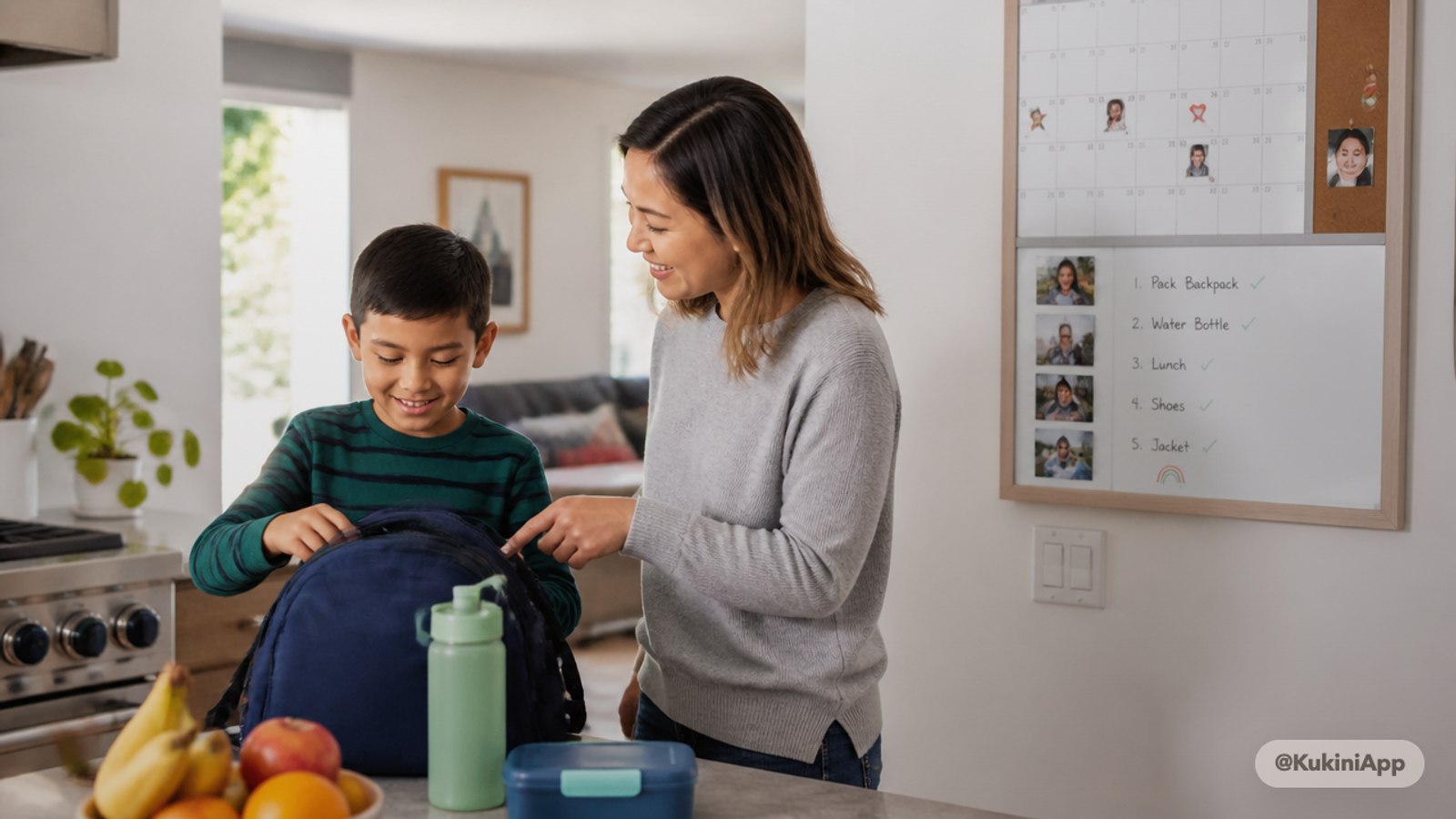
Parents are asked to optimize a lot: behavior, screens, enrichment, meals, schedules, moods, the whole stack. But the reality most families live in is less tidy than that. A newer Harvard working paper, echoed in a recent Fast Company piece, points toward a simpler idea: kids tend to do better when their environment is predictable. That does not mean every problem disappears. It does mean stability is worth treating as an actual advantage, not just a nice background feeling. The useful part is that families can build some of that stability in the ordinary parts of the day. Here is where that shows up first.
Stability works like a system, not a single habit
The Harvard paper describes stability across housing, finances, caregiver relationships, sleep, and daily schedules as a connected system. That is a helpful shift because it moves the conversation away from one magical fix. When one area gets steadier, the rest of family life often gets a little easier to hold together too. That is the multiplier effect the research points to, and it is a more realistic way to think about progress.
Predictable routines give kids something solid to stand on
Families cannot control every external pressure, and pretending otherwise only creates more guilt. What they can influence is the rhythm around those pressures. A consistent bedtime, a repeatable morning sequence, or a familiar handoff after school can make a child feel less like the day is happening to them. That matters because predictability is not just organizational polish; it can shape how safe the day feels.
Small stability moves beat grand family overhauls
This is not a call to turn family life into a rigid system. The point is to reduce friction where it is most exhausting. If mornings unravel, make the first 20 minutes more scripted. If evenings get chaotic, protect one repeatable anchor before bed. If transitions are hard, simplify the handoff and keep the same sequence for a while. The win is not perfection. The win is fewer places where the day has to be renegotiated from scratch.
The goal is steadiness, not control
Stability does not mean every day will feel calm. It means children have enough structure to recover faster when life is messy, which is most of life. That is also why this idea resonates: it validates the pressure families are already under without pretending the answer is more effort everywhere. If there is a place to start, it is usually the routine that creates the most daily drag.
A steadier day is a real form of support
Parents do not need another reminder that life is complicated. They need a way to make the complicated parts a little more navigable. The research-backed case for stability is encouraging because it points toward what families can actually shape: repetition, rhythm, and a few dependable anchors.
If this feels relevant, start with one routine that would make tomorrow easier to predict. Keep it simple enough that you can repeat it without a lot of negotiation, and let that be enough for now. That kind of small steadiness is still doing real work.