Why routines matter more than good intentions
 Kukini Team • 3 min read • May 19, 2026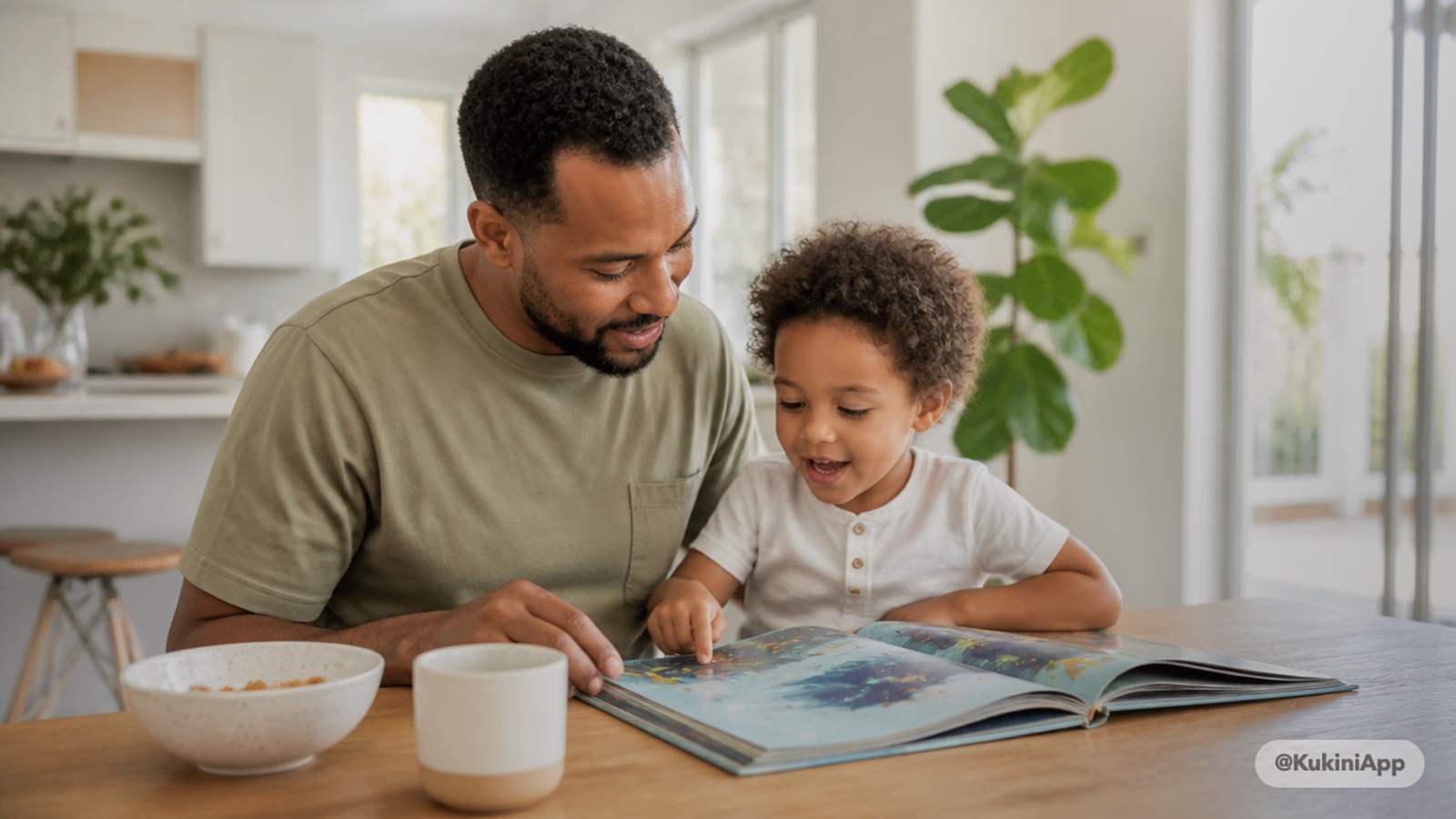
Most parents do want to support early learning. The problem is not usually caring less; it is that family life is crowded, and good intentions get squeezed out by everything else that has to happen first. That is why the most useful advice is often the least flashy: put learning support inside the routines you already repeat. A recent OECD report makes the same point by linking home learning environments with everyday reading, play, and conversation. Once you start there, the path becomes more realistic.
Daily life is the learning environment
The OECD frames early learning as something that grows through ordinary home life, not just through formal lessons or carefully planned activities. Shared reading, play, and conversation show up in the report as part of the environment that supports development. That matters because it lowers the bar: you do not need a perfect schedule to help a child build language, attention, and social understanding. You need repeated moments that are simple enough to actually keep happening.
Consistency does more than intensity
A big, well-meaning effort can feel satisfying in the moment and still be hard to sustain. Repeated small routines are less dramatic, but they are usually more reliable. Children also tend to benefit from the predictability of knowing what comes next: the same book after lunch, the same chat on the drive home, the same song while getting dressed. The point is not to turn every minute into a lesson. The point is to make learning part of the rhythm of the day.
Choose a few repeatable moments
The easiest place to start is with what already happens without much debate. Breakfast, bath time, the school pickup line, and bedtime are all candidates because they recur on their own. Pick one or two and decide what belongs there: a short book, a few questions about the day, a counting game, or a quick back-and-forth conversation. Keep it small enough that you can repeat it even when the day goes sideways, because that is when the routine starts to matter.
Small routines are easier to keep than perfect plans
The useful shift here is simple: stop measuring support only by how ambitious it sounds. A routine that happens most days will usually do more for a child than a bigger plan that only appears when everyone has extra energy. That does not mean parents need to add more pressure to the day. It means choosing one steady place where learning can live without asking for a separate block of time. Start there, and keep it modest.
If you want a next step, choose one routine you already trust and make it your learning anchor for this week. Then see what is realistic to repeat, not what would look best on paper. If you are looking for a softer way to stay consistent, that is the right place to begin.