Early learning lives inside ordinary routines
 Kukini Team • 3 min read • May 28, 2026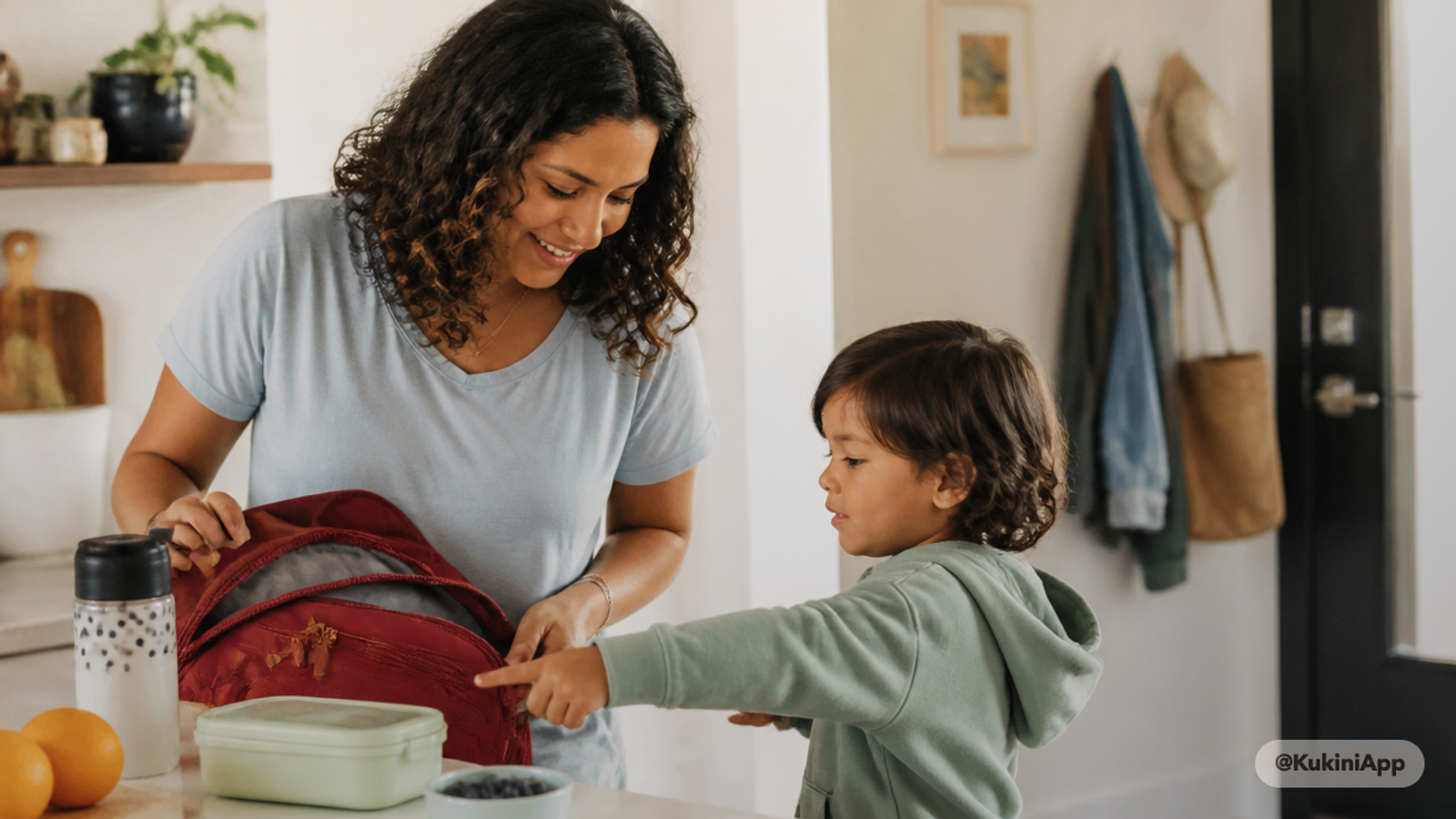
A lot of parents think about early learning as something separate from daily life: a workbook, a class, a planned activity, a good week when everyone is extra patient. But most of the time, children are learning inside the routines that already hold the day together. A recent OECD report describes home learning in terms of resources, parent-child interaction routines, warmth, and self-efficacy.
That does not mean every lunch, bath, or car ride needs to become a lesson. It means ordinary moments already contain repetition, language, choices, and shared attention. Those are useful ingredients, and they are usually sitting in the schedule already.
The point is not to add pressure. It is to notice what is already happening and make it easier to support. Here is what that looks like in practice.
Routines give children something to recognize
Children learn a lot from repetition because repetition gives them a pattern to follow. When the same sequence happens again and again, they start to notice what comes next, what words belong to a moment, and what they can do on their own. That sense of recognition matters because it turns a random day into something more understandable. For a parent, the win is not perfection. It is predictability that helps a child settle into the rhythm.
Simple moments create real language
You do not need to turn family life into a worksheet to support language. Talking while you pack a bag, count snacks, fold laundry, or walk to the car gives children a chance to hear words in context. They get practice naming things, asking questions, and hearing how people explain the world. That is ordinary conversation, but it is also learning.
The goal is consistency, not performance
A lot of parents feel pressure to make every interaction meaningful, and that pressure usually backfires. A calmer approach is to keep the routine steady and notice where curiosity already appears. The child who asks about the weather, the spoon, the order of the steps, or the reason for a rule is already leaning into learning. Your job is simply to leave enough space for that curiosity to show up.
Small routines do the heavy lifting
The everyday pieces of family life already contain most of what children need to learn: repetition, language, attention, and a little room to participate. You do not have to redesign the day to make that true.
Pick one routine this week and pay attention to the parts that repeat. That alone is enough to start seeing where learning is already happening, and where you can make the flow a little easier.
Start there.