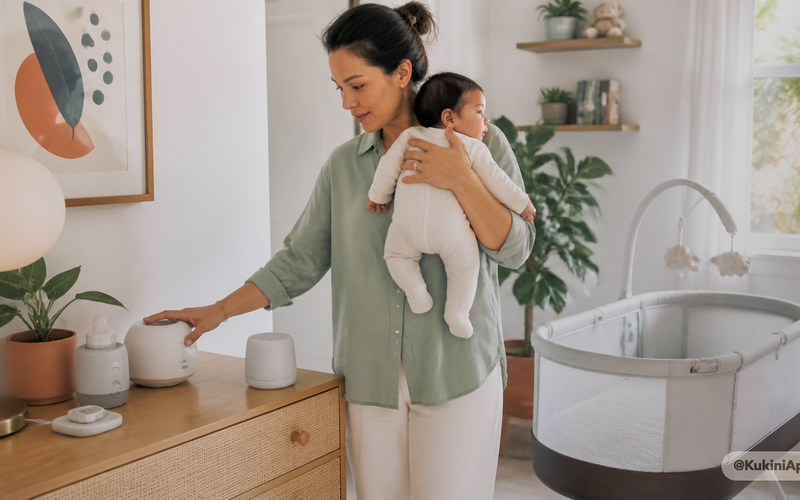
Why tracking less can make parenting feel calmer
 Kukini Team • 3 min read • June 25, 2026
A lot of parents start tracking because they want reassurance. That makes sense. When you are in the middle of baby sleep, feedings, and a brain that feels like it never fully powers down, a tracking app can feel like one more thing standing between you and some sense of order. But for some families, the app stops feeling supportive and starts feeling like a second job. A recent Reddit thread about deleting wake-window apps captures that shift in a very human way, and a Parents.com piece makes the same basic point: tracking can help, but it can also add stress. The useful question is not whether tracking is good or bad. It is whether the system is still helping you feel oriented. That is where a quieter approach starts to make sense.
When tracking starts creating the pressure
Tracking often begins with a practical hope: if the numbers are clear, the day will feel easier to read. But once every nap, wake window, and feed becomes another thing to monitor, the app can start to feel like it is supervising the parent instead of supporting them. That is the part many people recognize in the Reddit thread linked above. The frustration is not really about data. It is about how much mental space the data starts to take up.
A little less detail can still be enough
The Parents.com reporting is helpful because it does not pretend tracking is pointless. It simply notes that while baby tracking apps can help with organization, they may also worsen anxiety and stress for some parents, and detailed tracking is not always necessary. That is a useful reset. You do not need to document everything to be paying attention, and you do not need a perfect log to be a thoughtful parent. Sometimes the better system is the one that leaves enough room for the actual day to happen.
The goal is support, not surveillance
This is where the practical shift happens. If a tracking tool only helps when it stays quiet, then quiet is not a flaw. It is the point. Parents do not usually need more noise, more reminders, or more reasons to second-guess themselves. They need a way to notice what matters, keep the useful structure, and stop carrying the parts that have turned into friction.
Simpler can still be thoughtful
There is nothing careless about deciding that less tracking feels better. In a season that already asks a lot, simplifying can be a reasonable way to protect your energy and keep the support useful.
If a system has started to feel loud, try trimming it back to one or two things that genuinely help. The goal is not to do less parenting. It is to make room for a calmer version of the same care.